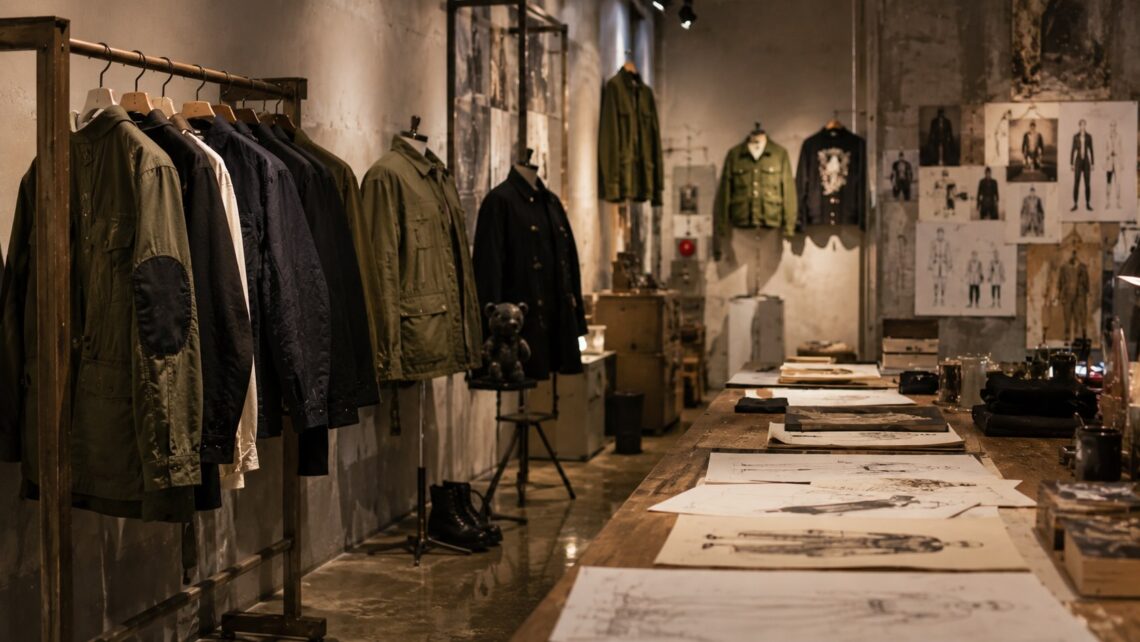
More than thirty years ago, two young designers shared a small retail space in Tokyo’s Harajuku district. One would go on to create BAPE and become one of the most influential figures in streetwear. The other would build Undercover into one of fashion’s most respected cult brands. Today, those two paths may be crossing again.
Human Made’s announcement that it intends to acquire Undercover is one of the most significant developments in Japanese fashion this year. While the deal is still in the negotiation stage, its importance extends far beyond ownership structures and financial terms.
At first glance, the acquisition appears straightforward. Human Made believes Undercover possesses enormous cultural value, global recognition, and creative influence that have not fully translated into commercial growth. In other words, it sees an opportunity to strengthen the business side of a brand that has already earned the respect of the fashion industry.
But the story becomes more interesting when viewed through a wider lens.
Undercover represents a type of fashion brand that is becoming increasingly difficult to sustain. Independent fashion houses face rising production costs, growing marketing expenses, and intense global competition. Remaining creatively uncompromised while building a profitable business has become one of the industry’s greatest challenges.
This is not unique to Undercover. Across fashion, many founder-led brands are searching for ways to preserve creative identity while gaining access to stronger operational support. The question is no longer whether creativity matters. The question is how creativity survives in an increasingly complex business environment.
What makes this potential acquisition different is that Undercover is not being absorbed by a global luxury conglomerate. Instead, it may join forces with a company that shares its cultural roots. Both Human Made and Undercover emerged from the same Japanese streetwear movement that helped shape global fashion throughout the 1990s and early 2000s.
That shared history matters.
Fashion acquisitions often raise concerns about whether a brand will lose its identity. In this case, Human Made argues that its goal is not to change Undercover’s creative direction but to provide the infrastructure needed for future growth. If successful, the arrangement could allow Jun Takahashi to focus more on design while benefiting from stronger distribution, retail expertise, and business operations.
The announcement also highlights a broader shift occurring across fashion. Cultural influence alone is no longer enough. Brands increasingly need systems, scale, and operational efficiency to compete globally. The challenge is finding growth without sacrificing authenticity.
Perhaps that is why this story resonates beyond business headlines. It feels less like a takeover and more like a reunion. More than three decades after helping define Japanese streetwear from a small Tokyo store, Nigo and Jun Takahashi may once again find themselves connected through the same organization.
The potential acquisition reminds us that fashion’s most valuable asset is not always a product or a logo. Sometimes it is the ability to preserve culture while adapting to change. And in an industry constantly chasing the next trend, that may be the most difficult balance of all.




One comment on “Why Human Made’s Planned Acquisition of Undercover Is About More Than Business”