GANNI is often described as one of fashion’s leading sustainable brands.But the Danish fashion company does not describe itself that way.
During a recent conversation at Copenhagen Fashion Week, GANNI co-founder Nikolaj Reffstrup explained why the brand has deliberately avoided calling itself a sustainable fashion brand, despite years of work around materials, climate and responsible production.
The reason is simple.Fashion is still built around consumption
Fashion brands create new collections, introduce new products and encourage people to buy them. As Reffstrup explained, this makes it difficult for a fashion company to claim that it is completely sustainable.
Instead, GANNI prefers to talk about responsibility.
The difference may appear small, but it changes the way a brand communicates its role.
Calling a company sustainable can suggest that the problem has already been solved. Responsibility, on the other hand, recognises that fashion still has a long way to go. It is about understanding the impact of the business and continuously trying to improve it.
This approach has also influenced real business decisions at GANNI.
When the company examined its carbon footprint, it identified materials as one of its major environmental challenges. Leather was among the materials with a significant impact, leading GANNI to phase out virgin leather.
The decision came with a commercial cost.
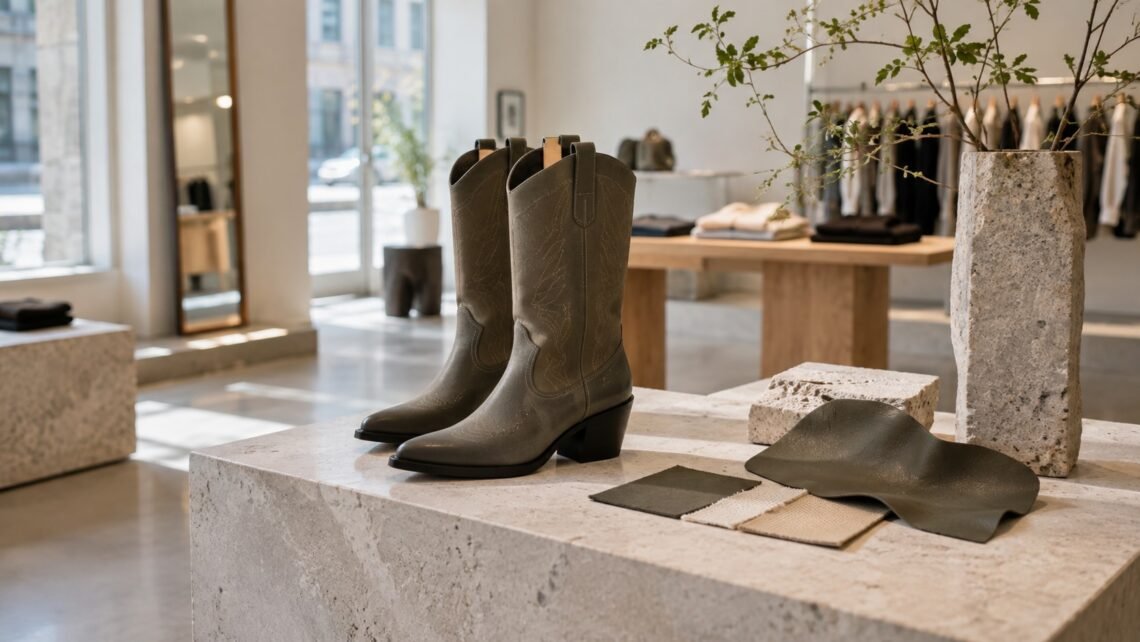
Two popular colourways of GANNI cowboy boots could not be recreated using an alternative material. Together, they represented approximately DKK 2.4 to 2.5 million in sales. Rather than continue producing them, GANNI decided to sell the remaining stock and discontinue those versions.
It is a small example, but an important one.
Sustainability discussions in fashion can often remain focused on campaigns, reports and promises. The more difficult question is what happens when environmental decisions affect the products a company can sell.
GANNI’s approach does not suggest that the brand has solved fashion’s environmental problems. In fact, Reffstrup was clear about the opposite.
Fashion remains a difficult industry to make more responsible.
Perhaps that is why GANNI’s decision not to call itself sustainable is interesting.
Rather than presenting sustainability as a finished achievement, the company presents responsibility as an ongoing process—one that involves experimentation, difficult decisions and, sometimes, giving up sales.
In an industry where sustainability has become one of the most frequently used words, perhaps recognising what a brand has not yet solved is more meaningful than claiming to have solved it.
For GANNI, the goal is not to appear perfect. It is to keep moving in a more responsible direction.





One comment on “Why GANNI Does Not Call Itself a Sustainable Brand”