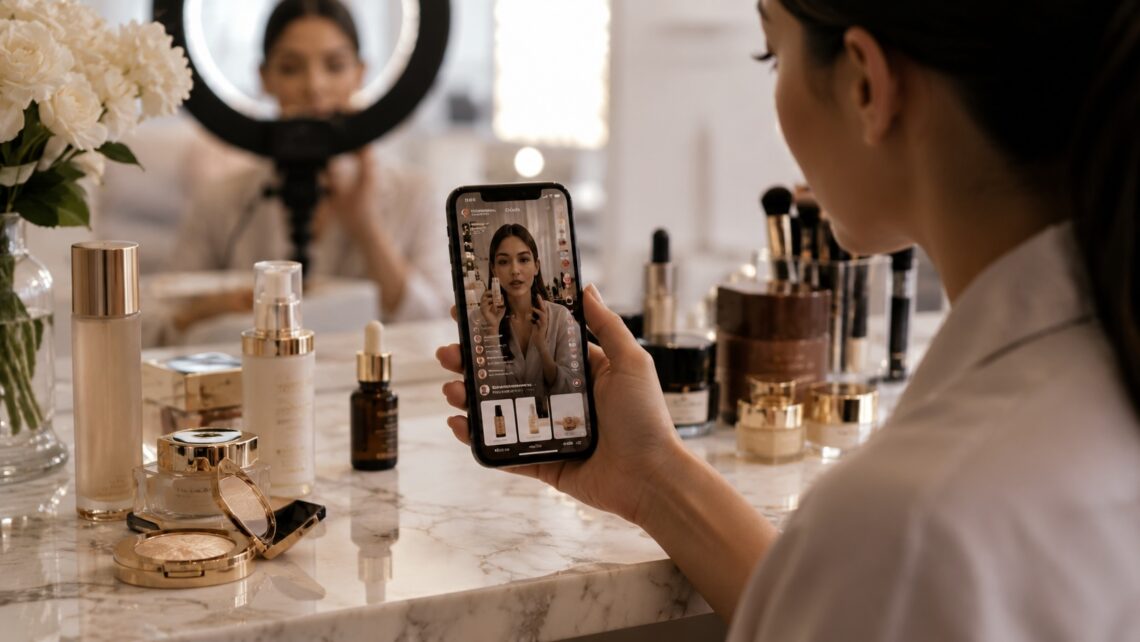
A few years ago, discovering a beauty product usually meant walking through a Sephora aisle, reading a magazine recommendation, or seeing a celebrity campaign. Today, a consumer can discover a cleanser, watch five reviews, see before-and-after results, and purchase it within minutes without ever leaving TikTok.
That shift explains why TikTok Shop has become one of the most important forces in beauty retail.
The platform is no longer just a social commerce experiment. Beauty sales on TikTok Shop have exceeded $4.4 billion in the United States, growing rapidly as consumers increasingly blend entertainment, product discovery, and shopping into a single experience. What was once a content platform has evolved into a retail ecosystem where attention can turn into a purchase almost instantly.
What makes TikTok Shop different is that it has compressed the traditional beauty marketing funnel. In the past, brands relied on advertising campaigns, retailers, and carefully planned launches to reach consumers. Today, a creator can post a product review in the morning and generate thousands of sales by the evening. Discovery and purchase now happen in the same place.
This shift has created a new generation of beauty winners. Korean skincare brands such as Anua, Medicube, and Dr. Melaxin have used TikTok Shop to build awareness and drive significant sales growth. Their success highlights an important reality: consumers increasingly trust demonstrations and creator recommendations more than polished advertising campaigns.
But the real value of TikTok Shop extends beyond direct sales. A product that gains traction on the platform often sees increased sales on Amazon, stronger direct-to-consumer performance, and greater interest from retailers. In many ways, TikTok Shop has become a real-time testing ground for consumer demand. Brands can see almost immediately whether a product resonates with the market.
This creates challenges for established beauty companies. Many legacy brands built their marketing around celebrity endorsements, high-production campaigns, and strict control over brand messaging. TikTok rewards a different approach. It favors authenticity, education, product demonstrations, and creator opinions. Consumers want to see products in real situations rather than perfect advertisements.
The rise of livestream shopping further strengthens this trend. Instead of watching a traditional advertisement, consumers can join a live session, ask questions, watch demonstrations, and purchase instantly. The shopping experience becomes interactive rather than passive.
For luxury beauty brands, the lesson is particularly important. Luxury has traditionally relied on exclusivity, aspiration, and carefully controlled storytelling. TikTok Shop suggests that modern consumers increasingly value transparency, education, and community validation alongside prestige. The challenge is not whether luxury brands should participate, but how they can do so without compromising their identity.
What makes TikTok Shop fascinating is that it is changing more than retail. It is changing how products earn attention. In beauty today, the brands that win are often not the ones spending the most on advertising. They are the ones creating products that people genuinely want to discuss, demonstrate, and recommend.
The biggest lesson may be that TikTok Shop is no longer simply a sales channel. It has become a discovery platform, a marketing platform, and a validation platform all at once. For beauty brands, ignoring it increasingly means ignoring where consumer attention lives, and in modern commerce, attention is often the first step to growth.




One comment on “Why Beauty Brands Can’t Afford to Ignore TikTok Shop”