For 2026, Ruinart has invited Japanese artist Tadashi Kawamata to be part of its ongoing project, Conversations with Nature. This series reflects the Maison’s desire to stay connected to the natural world and to explore that relationship through contemporary art.
Kawamata is known for his installations made from wood and reclaimed materials. His work is usually created directly within a space, responding to its architecture, climate, and surroundings. Rather than placing art into a location, he builds something that grows out of it.
The project begins in Paris, where two artworks are being unveiled at the Palais de Tokyo. It then moves to Ruinart’s historic address in Champagne, 4 rue des Crayères, where three permanent installations will remain. These works will also travel to selected art fairs during the year.
When Kawamata visited Ruinart in Reims, he was struck by the harmony of the Maison and its relationship with nature. He observed how the buildings, gardens, and landscape feel connected rather than separated. That impression shaped his response.
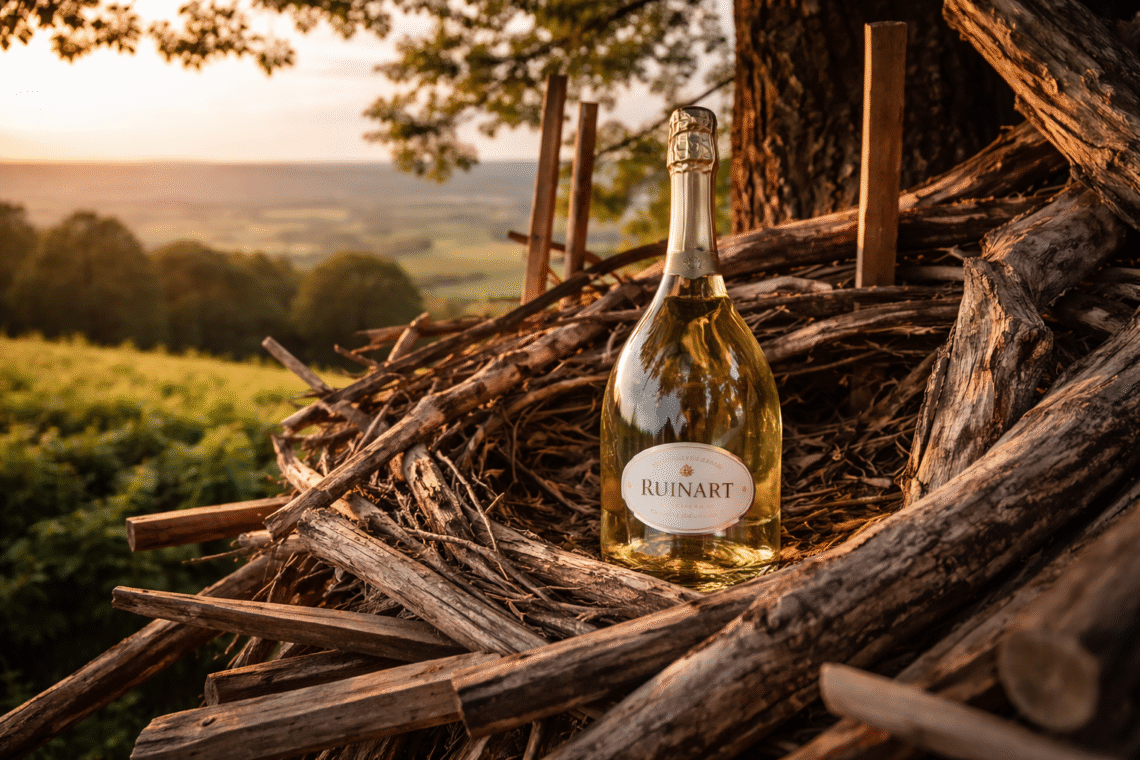
The three installations created in Reims — Tree Hut, Nest, and Observatory — reflect ideas of shelter, elevation, and observation. Wood becomes the main material, linking the artwork to growth and time. The pieces do not overpower the space. They sit within it quietly, almost like temporary structures that belong to the environment.
Kawamata has spoken about his interest in scale. He likes the idea that something large can become small, and that installations can also exist as objects. For him, an object feels closed and autonomous, while an installation remains in dialogue with its surroundings. This relationship between scale and space is central to his practice.
For Ruinart, this collaboration feels natural. The Maison has always emphasized its connection to land and heritage. Its chalk cellars, vineyards, and architecture are not just background. They are part of its identity.
By inviting Kawamata, Ruinart continues a conversation that is not about spectacle, but about awareness. The project does not try to dominate nature. It tries to listen to it.
In that sense, this collaboration feels less like an event and more like a reflection on how luxury can remain connected to the environment that sustains it.