Sewing as a Living System
For his first Haute Couture collection at Christian Dior, Jonathan Anderson approaches couture not as a fixed inheritance, but as a living system. One that thinks, adapts, and remains open to questioning. Rather than positioning couture as a ceremonial summit, Anderson treats it as an active laboratory, a space where ideas, materials, and gestures remain in continuous exchange.
This debut does not announce itself loudly. It proposes itself quietly. What if couture were not about preservation, but perception. What if sewing itself became a way of reading the present. Anderson’s couture feels less like an inauguration and more like an ongoing inquiry.
At the conceptual core of the collection lies the idea of sewing as a prism. Construction becomes language. Seams, layers, tensions, and volumes replace overt narrative, allowing craft to function as a form of thinking. There is no theatrical storytelling, no historical quotation worn on the surface. The garments communicate through precision and restraint. Couture here asks for attention rather than admiration. It rewards close looking.
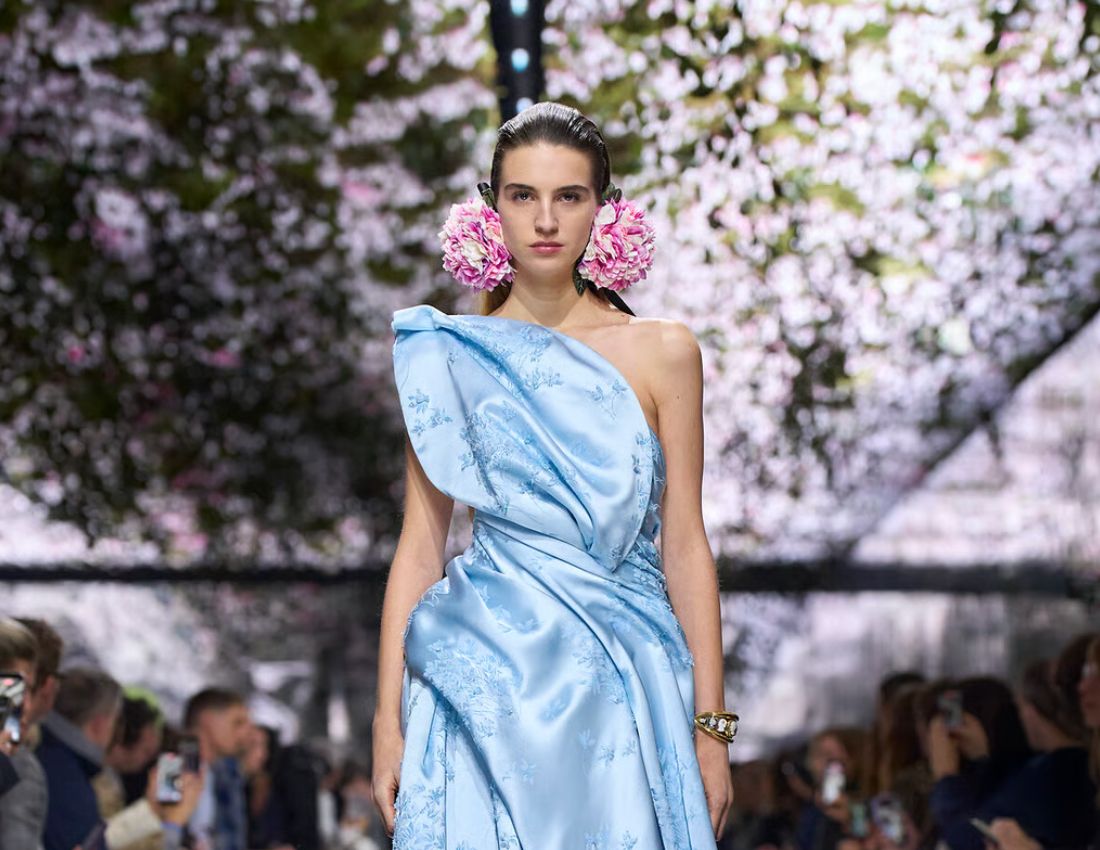
Nature runs through the collection, not as motif but as system. Anderson treats it as something shaped by movement, repetition, and time. This approach informs the silhouettes. Forms evolve rather than assert themselves. Layers shift, volumes breathe, and structures respond to the body instead of dominating it. Clothing feels grown rather than imposed, reinforcing couture as a process rather than a finished statement.
Structurally, the collection unfolds like a cabinet of curiosities. Anderson acts as a collector, assembling materials, textures, and artistic references without hierarchy. Each look exists independently, yet contributes to a broader logic shaped by curiosity and material intelligence. Nothing feels illustrative. Instead, the collection resists linear storytelling and embraces accumulation. Couture becomes something to be discovered, not decoded.
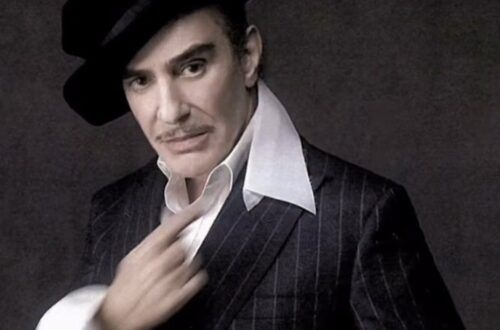
A subtle but significant moment of lineage appears beyond the runway. Bouquets of cyclamens, offered by John Gallianoto Anderson ahead of the show, quietly situate the collection within Dior’s creative continuity. The gesture acknowledges the past without reproducing it. Heritage is carried forward, not displayed.
Artistic influence is most clearly articulated through the sculptural logic inspired by Magdalene Odundo. Her work informs the collection’s controlled curves and anthropomorphic volumes. Garments echo the human body without copying it, amplifying presence and movement while remaining grounded in Dior’s architectural foundations.
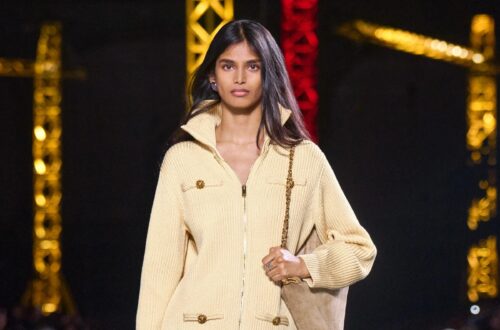
Craft operates from micro to macro. Hand-formed flowers, dense embroidery, speckled tweeds, and layered mesh function as structural interventions rather than embellishment. Mesh, in particular, becomes a key couture element, celebrating dexterity, experimentation, and the intelligence of the hand. Ancestral techniques are not preserved as relics, but activated as living knowledge.
Dior Haute Couture Spring–Summer 2026 reframes couture as cultural intelligence made tangible. Jonathan Anderson does not attempt to redefine Dior. He allows it to think again.



One comment on “Dior Haute Couture Spring–Summer 2026”